Our Horses and Horseback Riding
Riding at Concho Hills...A Unique Experience
Most of our guests come here for the horseback riding. We have been told that our riding program is unique at Concho Hills. But how can we claim it is unique if it is based upon traditional Spanish Vaquero techniques used for centuries and was taught to western cowboys? Western Riding was developed and evolved for the purpose of working cattle.
Horsemanship...A Rewarding Journey
Transitioning from pleasure riding to working cattle was an enlightening journey for my wife and me. We discovered that the skills we had mastered for trail riding didn't fully translate to the demands of ranch work. Moving cattle required us to enhance our horsemanship, focusing on cues using our body, seat, and legs that allowed our hands to be free for tasks like moving tree limbs out of the way, roping, or opening gates. We learned it was the little things that count and correct practice was essential to get performance from the horse. We also learned that "every time you ride a horse you train a horse!" Hence it is important to one's safety and welfare of the horse to embrace this learning curve. It's not about one style being better than the other, but about adapting to the specific needs of the job. It's a rewarding experience that significantly broadens your horsemanship skills and pleasure in riding horses.
We like to think of horsemanship as the rider traveling a parallel trail with the horse. For both, it begins on the ground learning about what is important to each other and how to avoid harm. Then comes knowledge of the gear. Next comes the riding. Basic at first and then becoming more advanced; each step based upon what was learned before. But the real magic unfolds as the journey continues: mastering subtle cues with your seat and legs, navigating varied terrain, building a deeper relationship with your horse, and discovering the freedom of riding across wide plains or winding through breathtaking landscapes. The effort and time invested lead to profound rewards—the sense of harmony, accomplishment, and those unforgettable vistas that make every step worthwhile.

Essential
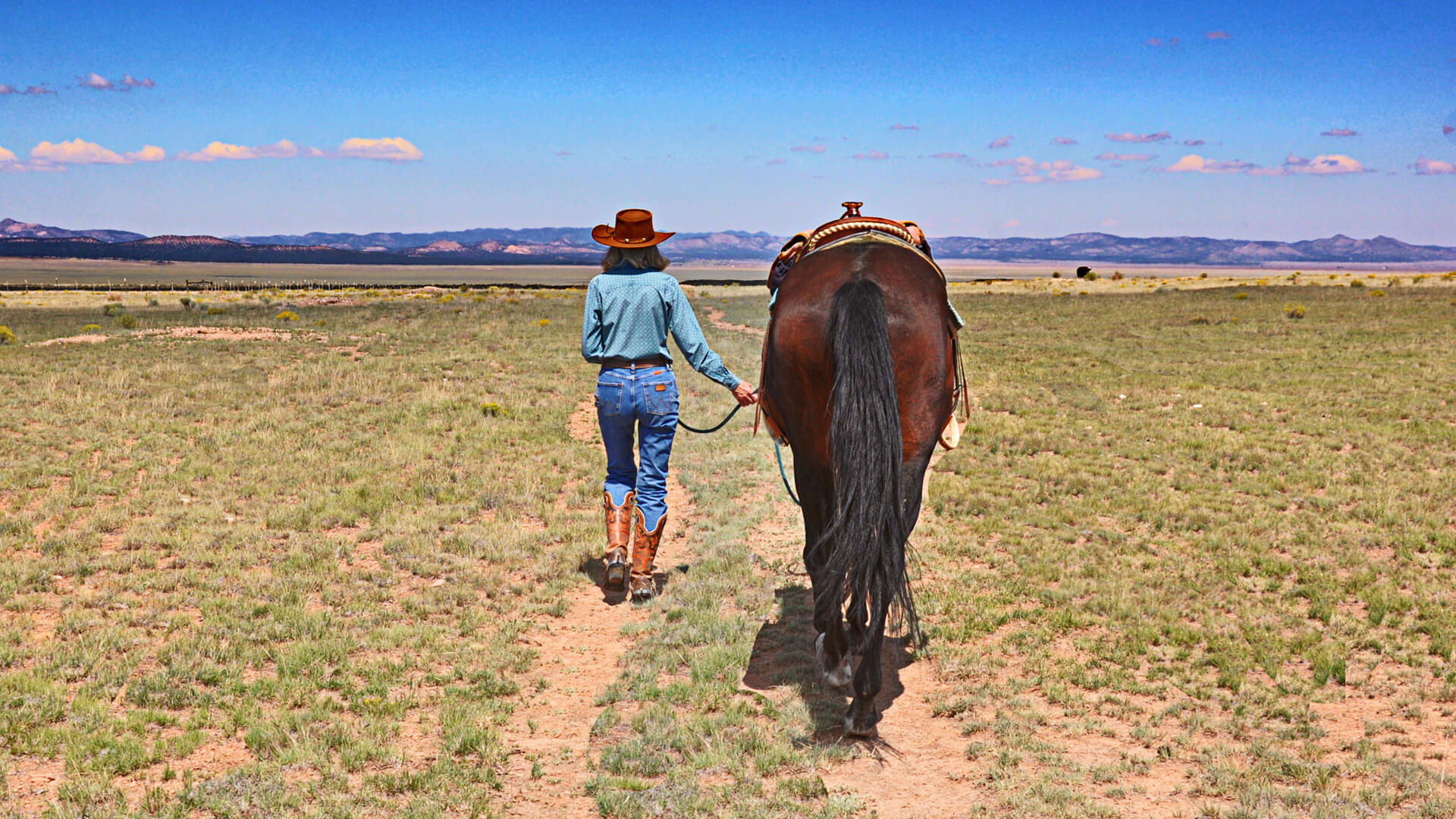
In these parts, horses and horseback riding are essential to our way of life. We feed’em, groom’em, ride’em and sometimes cuss’em…but we can’t get along without’em!
They are much more than a pet. They provide a method to get the job done.
Central to Ranch Life
Western riding and its gear was developed and evolved to accomplish one function...work cattle.
Horseback riding is our primary activity and mode of transportation. From beginner to advanced rider one can spend hours in the comfortable western saddle, riding trusty ranch horses. We want the horseback experiences to be fun for everyone…including the horse.

Well Trained Horses
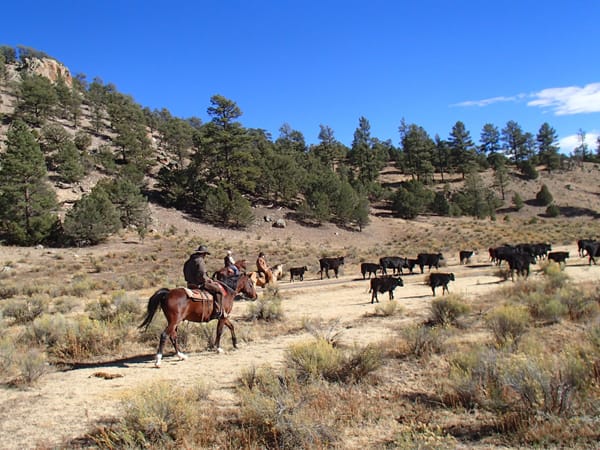
It seems our horses can read the rider's mind. They can't. They have just been well trained. Cowboys spend a lot of time training their ranch horses. They need a horse that will go where anywhere the rider wants, at the speed the rider wants, and to stop quickly. Everyone riding them must understand help maintain that training. Our horses live among predators and cattle and act and react accordingly.
Experience Not Necessary
Don’t ride? Don’t worry! We have the ability to teach the basics of western riding. Oftentimes, being a beginner gives one an advantage because the beginner doesn't have to "unlearn" things not applicable to ranch riding.
Riding is a skill and it takes time, practice, and some physical ability to become competent. So give yourself some time when booking your stay to be comfortable and safe in the saddle.

Safety First
Riding horses comes with inherent risks. The risks are real and apply to everyone. Our goal is to have you enjoy this western adventure with the most assurance that you ride will be as safe as possible. This means you will have to learn to ride a horse.
Guests at our ranch learn how to communicate with our horses using techniques that mirror natural horse interactions. Consistency in this communication is vital to your safety and maintaining our horses' abilities.

Only ONE WAY to Ride a Horse!
There are many styles of riding, each with its own purpose.
But we believe there is only one way to ride a horse…the way the horse has been trained.
You will ride horses trained for cattle work. Their training is deeply rooted in cowboy culture and the origins of western riding. By emulating the vaquero style, (known formally as jineta or vaquero horsemanship, or informally as ranch riding), you can establish consistent communication with our horses.
We offer an experience where you truly "ride a horse" rather than simply "going for a ride." With no predetermined trails, our horses rely on the rider for guidance and direction. Consistency in communication is key.
But here's the truth: western riding, like any worthwhile skill, takes time and dedication.
Riding Ranch Style
At Concho Hills we have developed a riding program unique to cowboy culture. It is an equine journey of learning, growth, evolving into competence and confidence. It's about understanding the horse's language, building trust, and learning to be the leader.
To accomplish this, you will begin to learn (if you don’t already know) to ride “ranch style.” These techniques emphasizes subtle communication through the rider’s seat, legs, and weight shifts to guide the horse, with reins used sparingly for refined collection and precise movements. Unlike other riding styles, our horses are mostly ridden with loose reins. You will learn why and how this helps the horse and the rider.


Intro to New Mexico Vaquero Horsemanship Clinic
In this clinic, each of our guests, regardless of experience, learns or reviews how our equipment works and its effects on the animals. Our guests are fitted to the most appropriate saddle, reminded how to sit the western saddle, and the importance of an independent seat. We discuss horses, bits, rein control, and the principles of how to get the horse to go where we want it to go.
The Round Pen
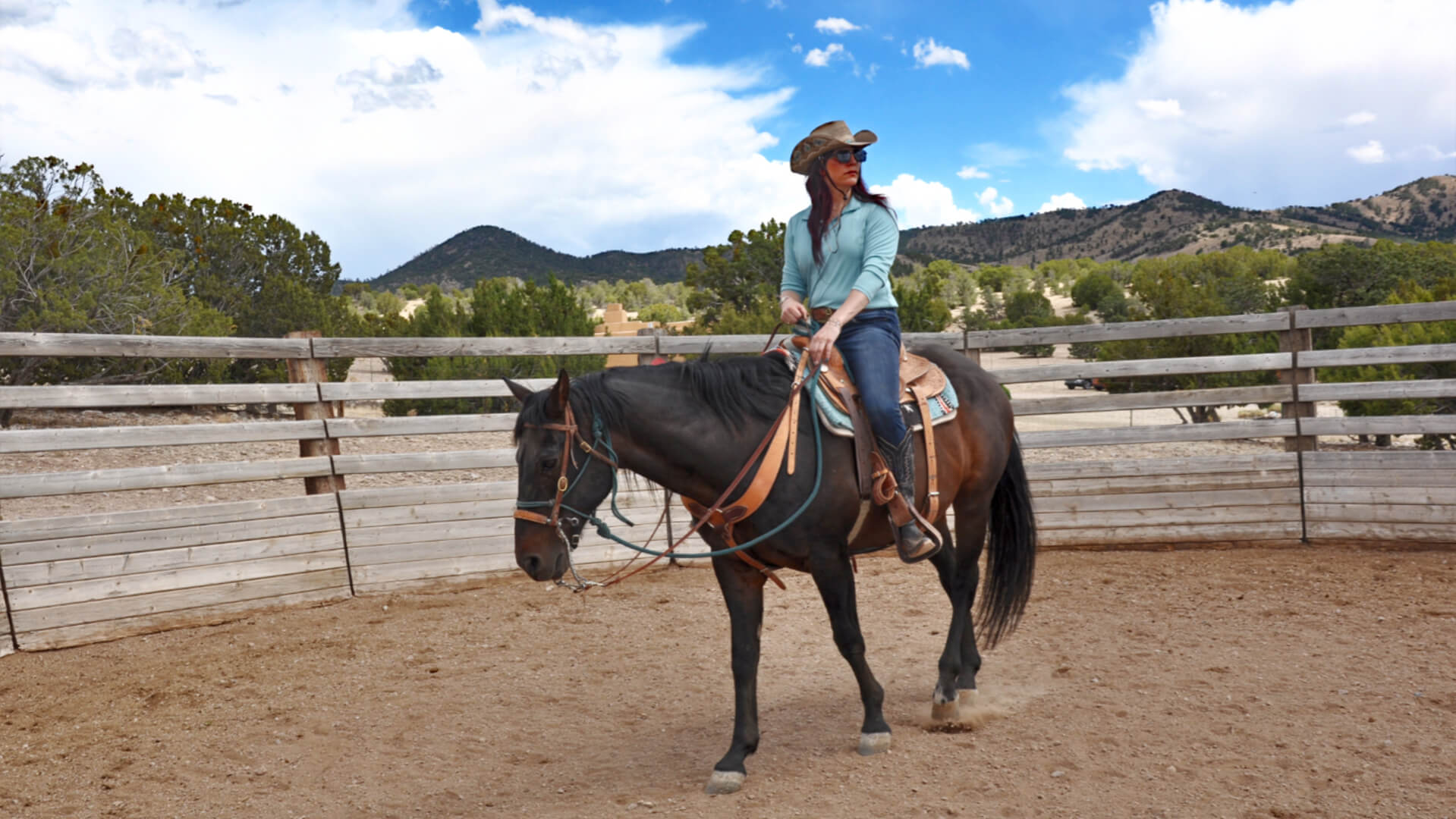
Our guests have a lot of knowledge by this time and it is time to put it to use. First we will learn to saddle up. Then we will start our practical fundamentals in the round pen.
Each guest needs to demonstrate basic maneuvers: start and stop the horse, three circles around the round pen in each direction, turn right or left on command, and backup the horse all with minimal use of the reins. It is challenging, frustrating, and then fun when you achieve your goals.
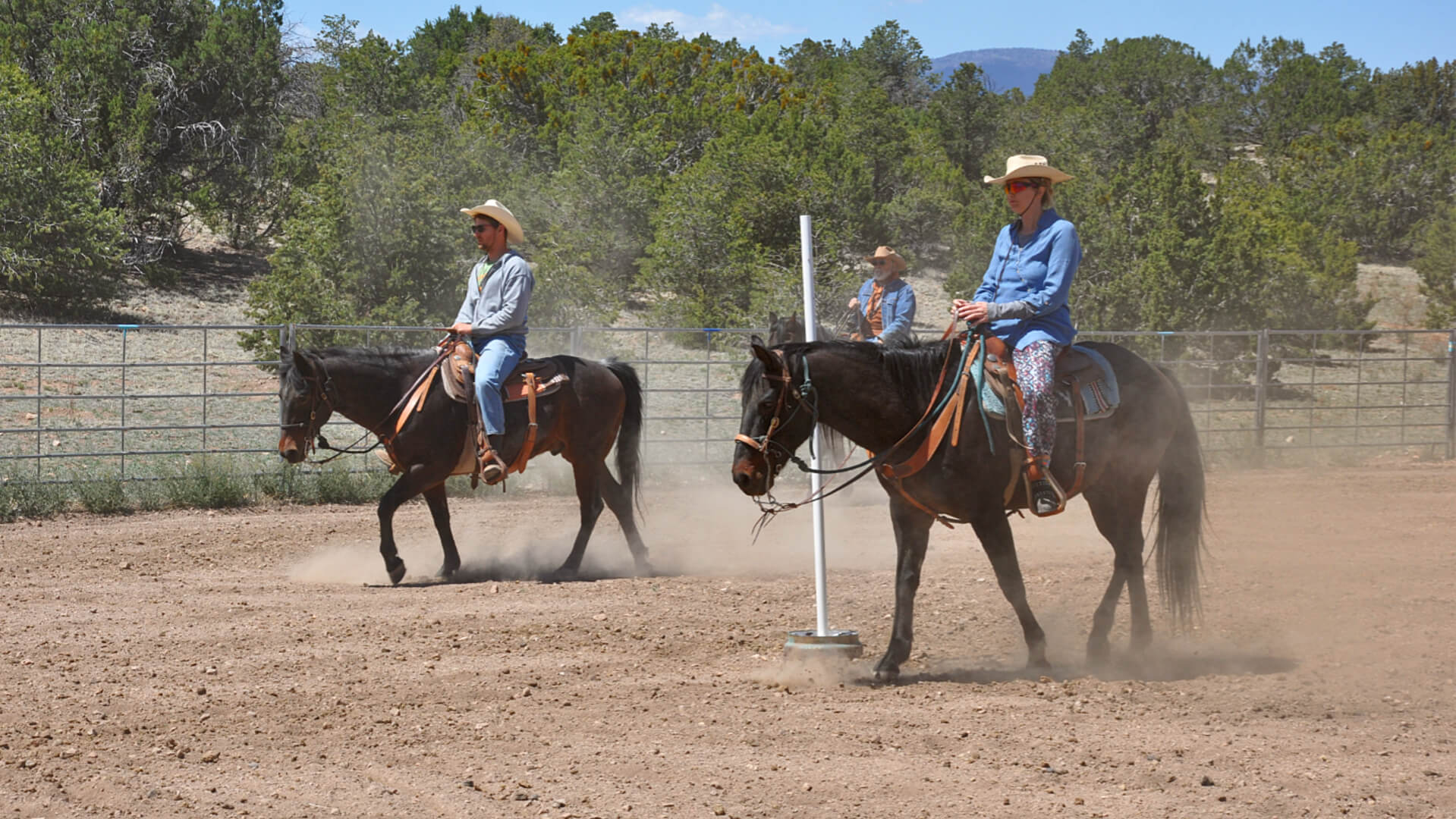
The Arena
With the demonstrated ability to perform basic maneuvers, we ride over to the arena. The arena is a much larger controlled area to practice basic maneuvers while improving our precision and competence. We will do a little trotting and a short canter to make sure you can stay in the saddle.
We know “every time you ride a horse you train a horse,” so we will be insistent that riders use techniques consistent with the horse's training. That enhances the horse’s performance, one’s safety, enjoyment, and the enjoyment of other riders. Safety requires that our guests feel confident being able to turn the horse during a trot and canter before leaving the arena. Only AFTER being able to control one’s horse safely in the arena, do we take people out on the range.
For riders unfamiliar with our style of riding, it takes time to absorb the techniques and put them into practice. How much time it takes depends upon the individual.
Ridin' the Range
You will apply your riding style and your skills on the range. The techniques don't change. The way you ride on the range is the same as how you rode in the arena. You just have more things to look at and enjoy. Each ride builds confidence while improving your riding skills and horsemanship. As one's competence increases, their enjoyment of the range increases.
Some guests have not used the muscles used for riding horses in a long time and can find themselves a little sore. We recommend less frequent riders to allow for shorter rides with breaks to “get back in the saddle.”

Riding is a Physical Activity
Horseback riding is a physical activity. Rider fitness is important for safety (yours and your fellow riders), reducing soreness, as well as being associated with reduced injury outcomes. Everyone should be physically able to mount and dismount their horse without assistance. We will provide you a list of exercises to help determine or improve your rider fitness.

Step Your Riding up a Notch
Many of our guest return year after year to improve their riding knowledge and skills. Sometimes they just want to see what they didn't see before.
You might choose to try your hand at pole bending, barrel patterns, and a little competitive fun. Our staff is always willing to share their knowledge.
“It’s all about the horses”……and having FUN!
Riding Lessons and Tips
We teach a riding style passed down to us by Ed Krauss. Ed was a registered cutting horse trainer with the National Cutting Horse Association. It is with great sadness that our friend, mentor, and riding instructor passed away in October 2019. We will miss him more than words can say. We have posted a Tribute to Ed Krauss here.
We do our best to offer lessons using the style and techniques he taught us and share his wisdom.
Why not sign up for a week of immersive lessons?

YouTube Channel
If you are interested, you can view our YouTube Channel here: Concho Hills Guest Ranch YouTube. We are in the process of making some videos of riding tips, our ranch, and the area.