Horsemanship
Horseback Riding - The Gateway to Ranch Life
Most people come to Concho Hills because they want to experience authentic ranch life. That raises an important question: What makes ranch life authentic? Is it the horses, the cattle, the scenery, or the cowboy hat? We eventually realized that authenticity is not defined by appearances, but by purpose. Ranch life is built on stewardship—the daily responsibility of caring for the land, the horses, and the cattle. The deeper experience comes from participating in that stewardship rather than simply observing it.
For generations, horses have made that participation possible. They allow ranchers to cross country, inspect fences, check cattle, reach places vehicles cannot, and respond to whatever the day requires. The horse is far more than transportation; it makes stewardship possible across the vast landscapes of the American West, allowing ranchers to be present wherever they are needed. The more skilled the horseman, the more effectively horse and rider can work together, and the more fully they can participate in ranch life.
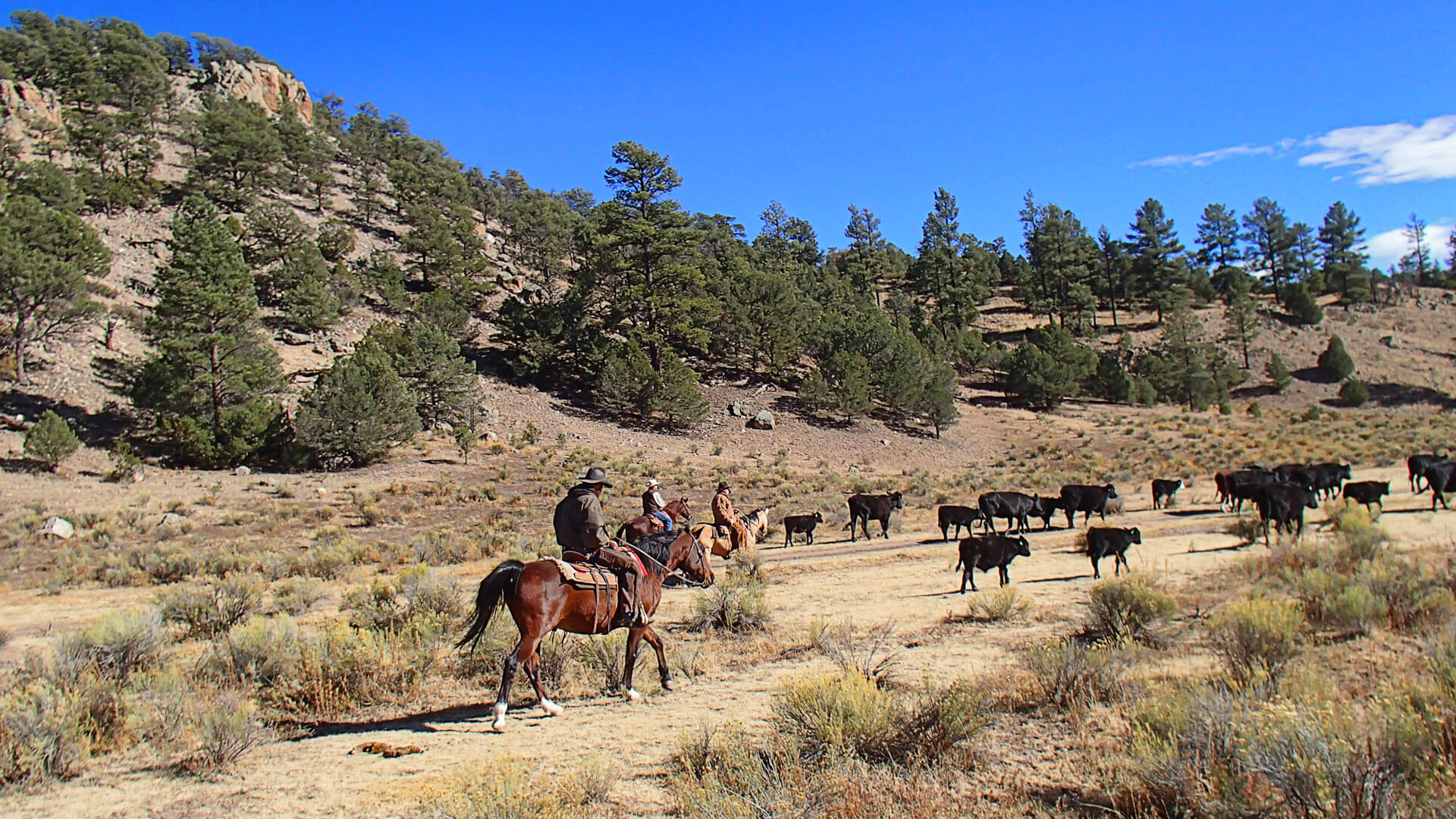
Our horsemanship program is built on that idea. We do not teach riding as an end in itself. We teach the fundamentals of horsemanship because they open the door to a deeper understanding of the horse, greater participation in ranch activities, and a more authentic experience of western living.
Why We Teach Before We Ride
Transitioning our horsemanship from observer to participant was an enlightening and often frustrating journey for my wife and me. We discovered that the skills we had learned for “going for a ride on a horse” didn't translate or prepare us for the horsemanship required for ranching. Some techniques were even incompatible with our desire to participate in ranch life.
The most startling revelation was that the very techniques we struggled to unlearn had been performed so frequently they had solidified into automatic muscle memory. We often became frustrated when our instructor repeatedly pointed out habits we didn't even realize we had. Our frustration wasn't with learning something new. It was realizing how much easier our progress would have been had we learned the fundamentals correctly from the beginning.
We have heard similar frustration come from some of our experienced guests when they say: “I had no idea there was so much involved." or "Why didn't anyone teach me this before?" We believe this frustration can be minimized. People can safely transition from observer to participant. With proper emphasis upon learning the fundamentals, one can not only learn the basic western horsemanship, but they will develop a foundation that doesn't have to be changed as they continue their western horsemanship journey.
Understanding the Horse
One of the most important lessons we learned during our transition from observer to participant was that successful horsemanship depends upon more than the rider's intentions. Every ride involves another mind—the horse's. Before we can communicate effectively, we must first understand how horses perceive, learn, and respond.
Good horsemanship begins with understanding that horses perceive and respond differently than people. Your body position and body language communicate constantly with the horse—often without your realizing it.
Clear communication is more effective than stronger communication. That principle is reflected in one of the sayings that guides our horsemanship:
As light as possible...as firm as necessary.
As your understanding grows, so does your ability to communicate with the horse. The horse's responses provide immediate feedback about the clarity and timing of your cues. You'll soon discover that effective horsemanship involves far more than the reins. This understanding becomes the foundation for everything that follows in our clinic.
Our horses have been carefully trained to respond to light, consistent cues. To preserve that training and provide every guest with the same responsive horse, we teach riders to communicate in the manner the horses understand.
The Vaquero Tradition
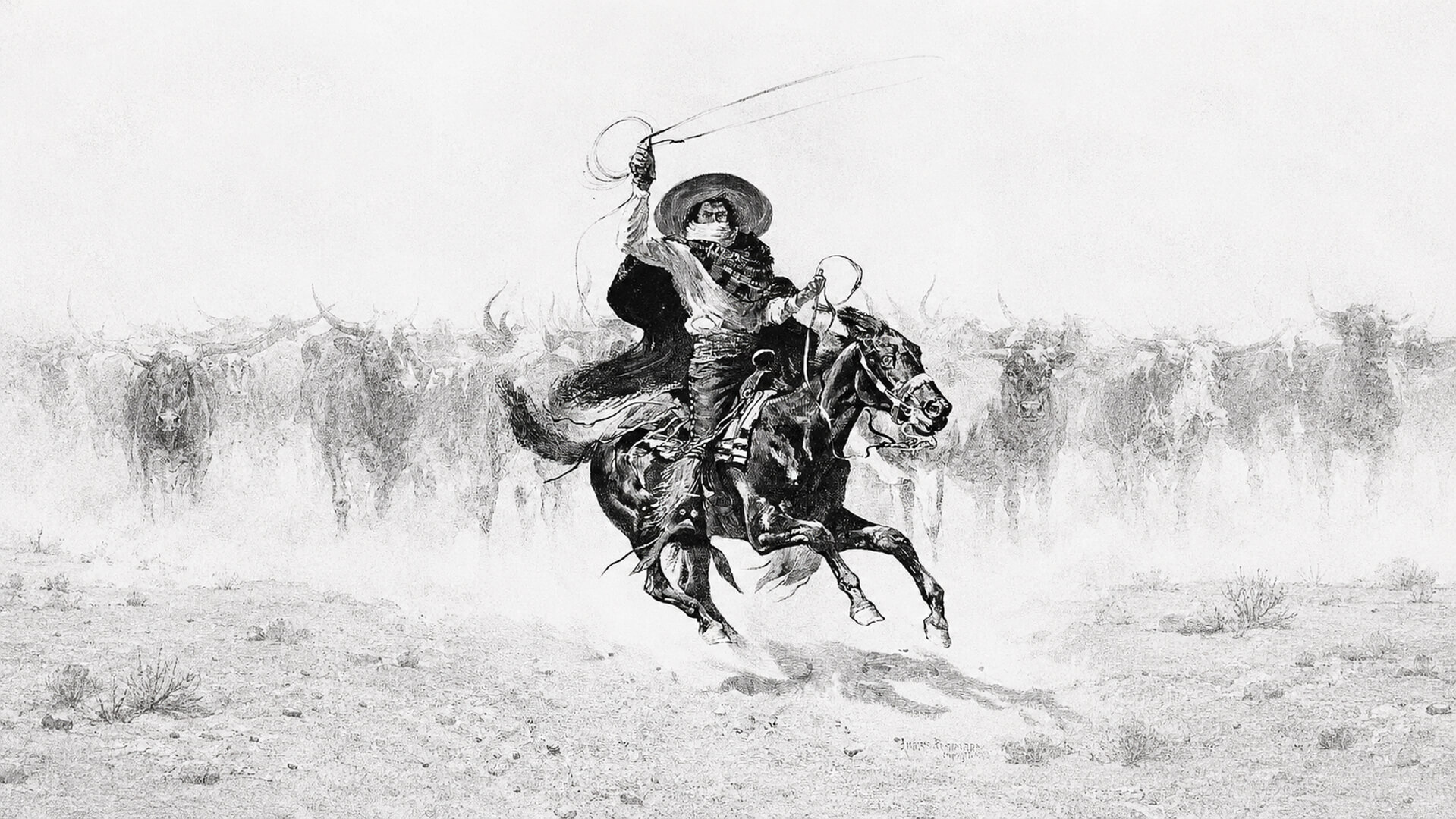
The horsemanship we now associate with the Western cowboy evolved largely from a practical need: managing cattle.
These horsemanship techniques did not originate in the West. Spanish horsemen brought horses, cattle, equipment, and established riding traditions—including la jineta—to the Americas. As cattle ranching developed in New Spain, vaqueros adapted those traditions to the livestock, landscape, and demands of their work. Over generations, their equipment and horsemanship evolved into the foundation of what we now recognize as Western riding.
This tradition is more than a collection of old customs. Its methods were refined through generations of practical use by horsemen whose livelihood depended upon them. Techniques endured because they worked; equipment evolved because it served a purpose. This tradition rewards patience, practice, and persistence. Learning to accomplish more with less takes time—one of the reasons "cowboy up" at Concho Hills means being willing to learn, accept a challenge, and keep trying when everything doesn't come easily.
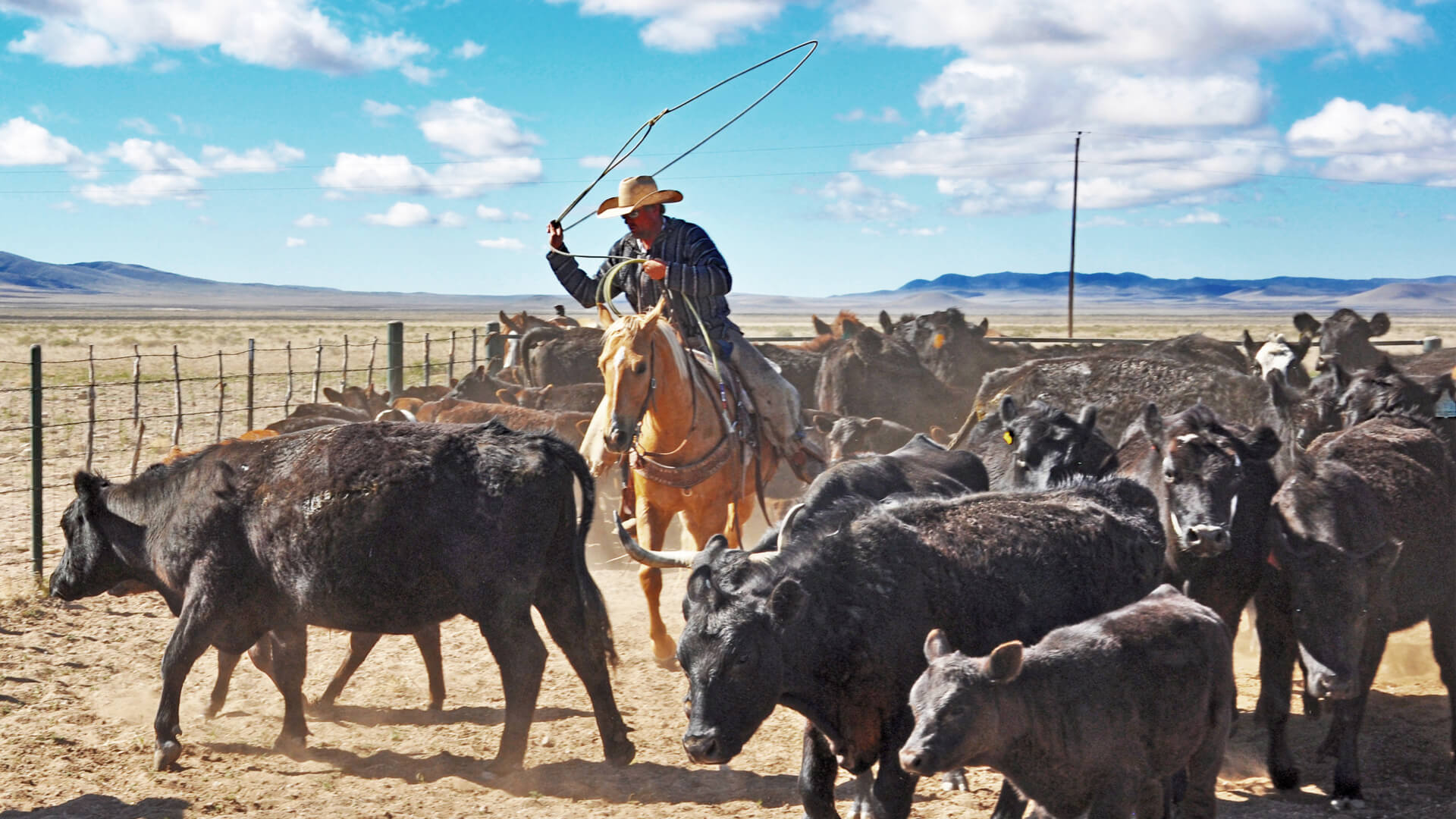
One principle remains central to the vaquero tradition: the horse is ridden primarily through the rider's balance, seat and legs, allowing the reins to become a refined means of communication rather than the primary means of control. These methods reflect our guiding principle: "As light as possible...as firm as necessary."
This tradition remains alive in New Mexico and continues to influence ranch horsemanship throughout the West.
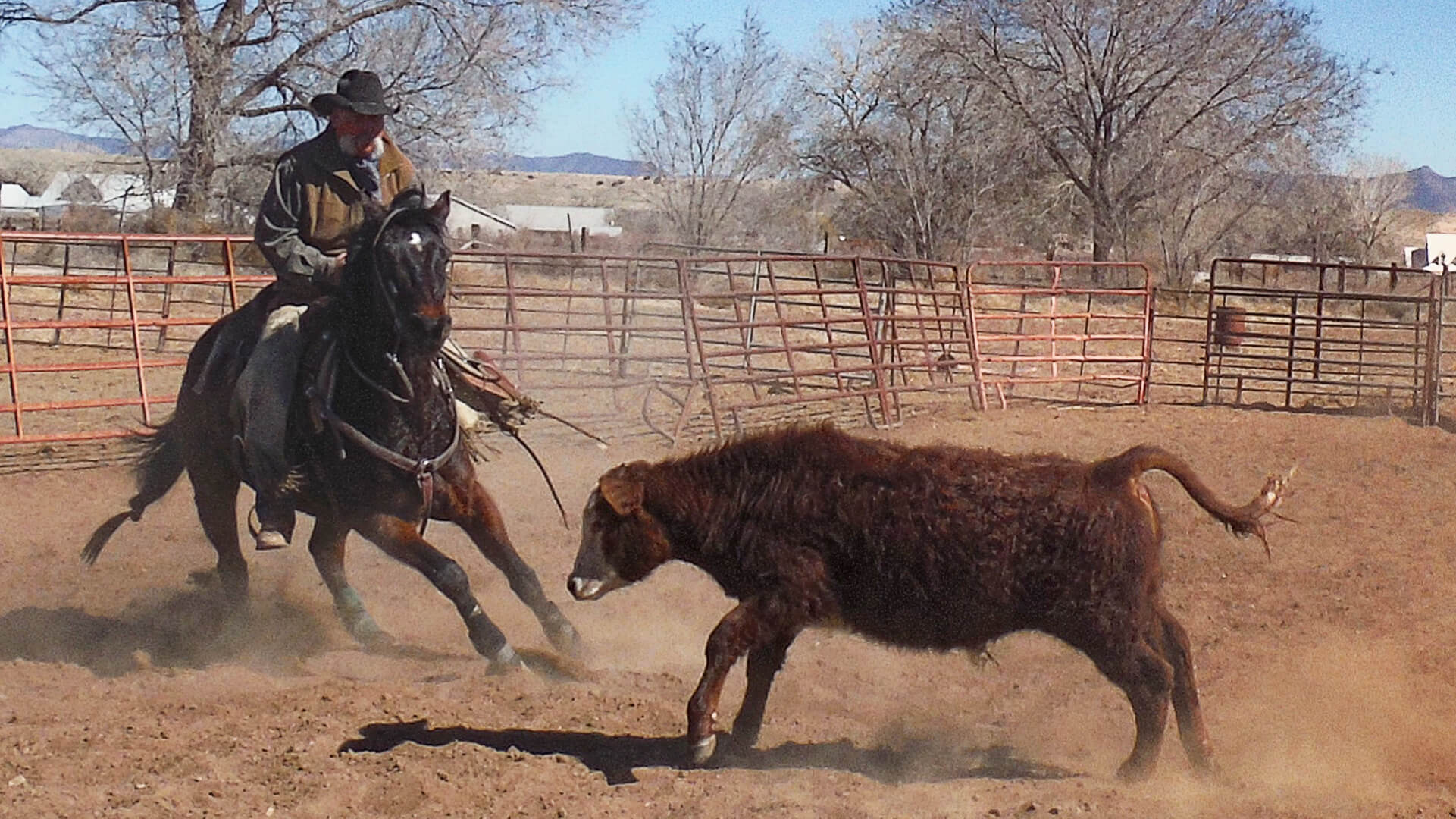
These techniques were not invented at Concho Hills. They have been refined and tested over generations of practical use. We are students and practitioners of that tradition.
Much of our own horsemanship education came through our longtime instructor and mentor, Ed Krauss, a registered cutting horse trainer with the National Cutting Horse Association. Ed taught us not simply a series of riding exercises, but a consistent way of riding and working with the horse. Although Ed passed away in 2019, we continue to practice and share the principles he taught us.
Read our tribute to Ed Krauss
Physical Requirements for Riding
Horseback riding is a physical activity, and rider fitness is important for both safety and enjoyment. Riding on the open range requires sufficient strength, balance, flexibility, and mobility to safely control your body around and on the horse.
Riders must be physically able to mount and dismount their horse from the ground without assistance. Although terrain or a mounting block may sometimes make mounting easier, riders cannot depend upon either being available on the open range. This ability is an important requirement for safely participating in our riding program.
If you haven't ridden recently—or simply want to prepare for your stay—we've put together a list of exercises that can help you evaluate and improve your rider fitness before you arrive. Please also review the current riding requirements and weight limit on our Rates page when planning your stay.
Introduction to New Mexico Vaquero Horsemanship Clinic
We designed our Introduction to New Mexico Vaquero Horsemanship Clinic to give guests the knowledge and fundamental skills needed to ride their horse with increasing independence on the open range. This is a participatory clinic—you will learn, practice, accept coaching, and sometimes try again. Like learning any worthwhile skill, there may be moments of frustration, but working through those moments is also what makes accomplishment rewarding.
We begin with knowledge and progress step by step from the Tack Room to the Round Pen, Arena, and finally the Open Range. Each stage builds upon the one before it, and moving from one stage to the next is based upon the rider's ability rather than a fixed schedule. Everyone learns at their own pace, so the amount of time spent at each stage will vary. The goal is not to hurry through the clinic, but to build a foundation that will serve you here and wherever your horsemanship journey takes you.

Tack Room
The clinic begins with knowledge. Before mounting, we introduce basic horse behavior and safe handling, fit the rider to a saddle, and explain how the rider's seat and legs communicate with the horse. We also introduce pressure and release and techniques for remaining secure when a horse reacts unexpectedly.
We spend time on one of the most misunderstood pieces of cowboy equipment—the bit. What is on the horse's head or in its mouth determines how the rider should use the reins. Understanding that relationship between hands and headgear helps the rider communicate clearly while using the lightest effective cue.
By the time we leave the Tack Room, you'll understand the principles you'll soon put into practice on horseback.
Round Pen
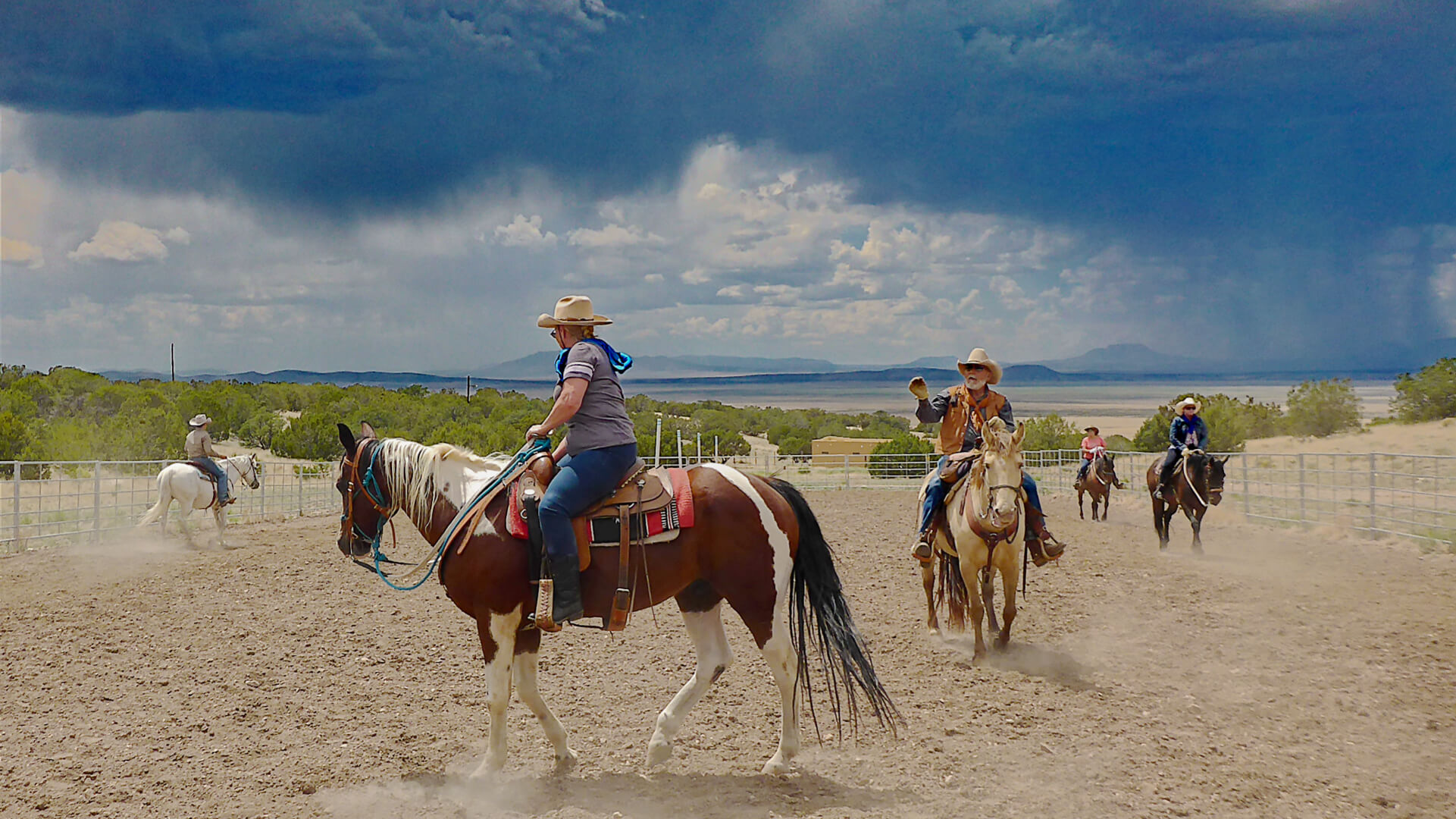
The Round Pen is where knowledge becomes practice. Its controlled environment allows you to concentrate on the fundamentals without the distractions and obstacles of the open range. You'll begin by preparing your horse to ride—leading, grooming, padding and saddling—while becoming more aware of both the horse's reactions and your own actions.
Our goal is simple but important: independently ask the horse to move forward, ride in both directions, turn right and left, stop, and back up.
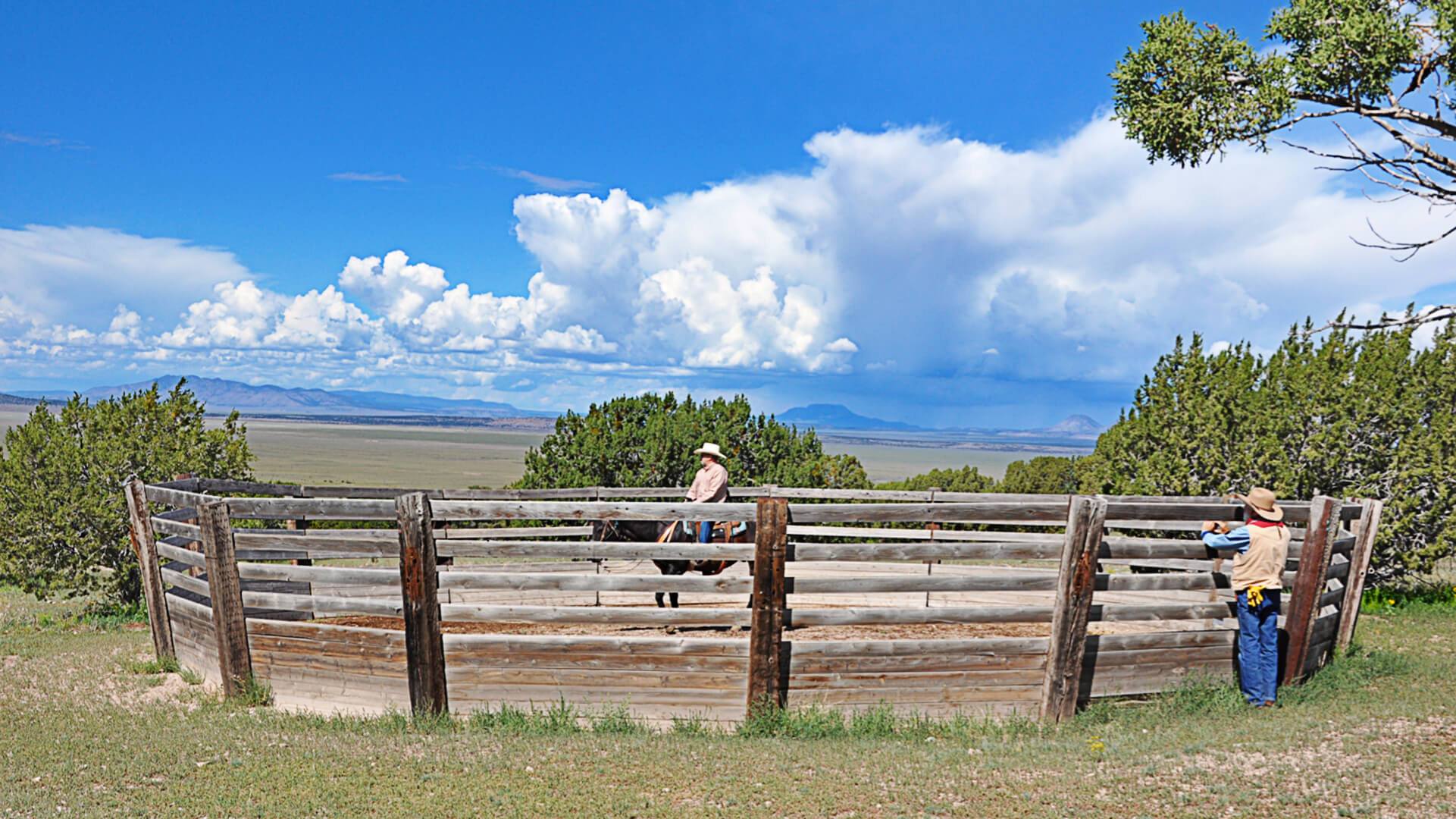
Each rider practices these maneuvers individually, receiving coaching and trying again as often as necessary. This is where "as light as possible...as firm as necessary" begins to have practical meaning. You begin to understand timing—when to apply and release a cue—and to recognize when the horse has understood, when it has not, and how to adjust without simply becoming stronger.
Progress is individual. Each successful maneuver builds skill and confidence, preparing the rider for the next step.
The Arena
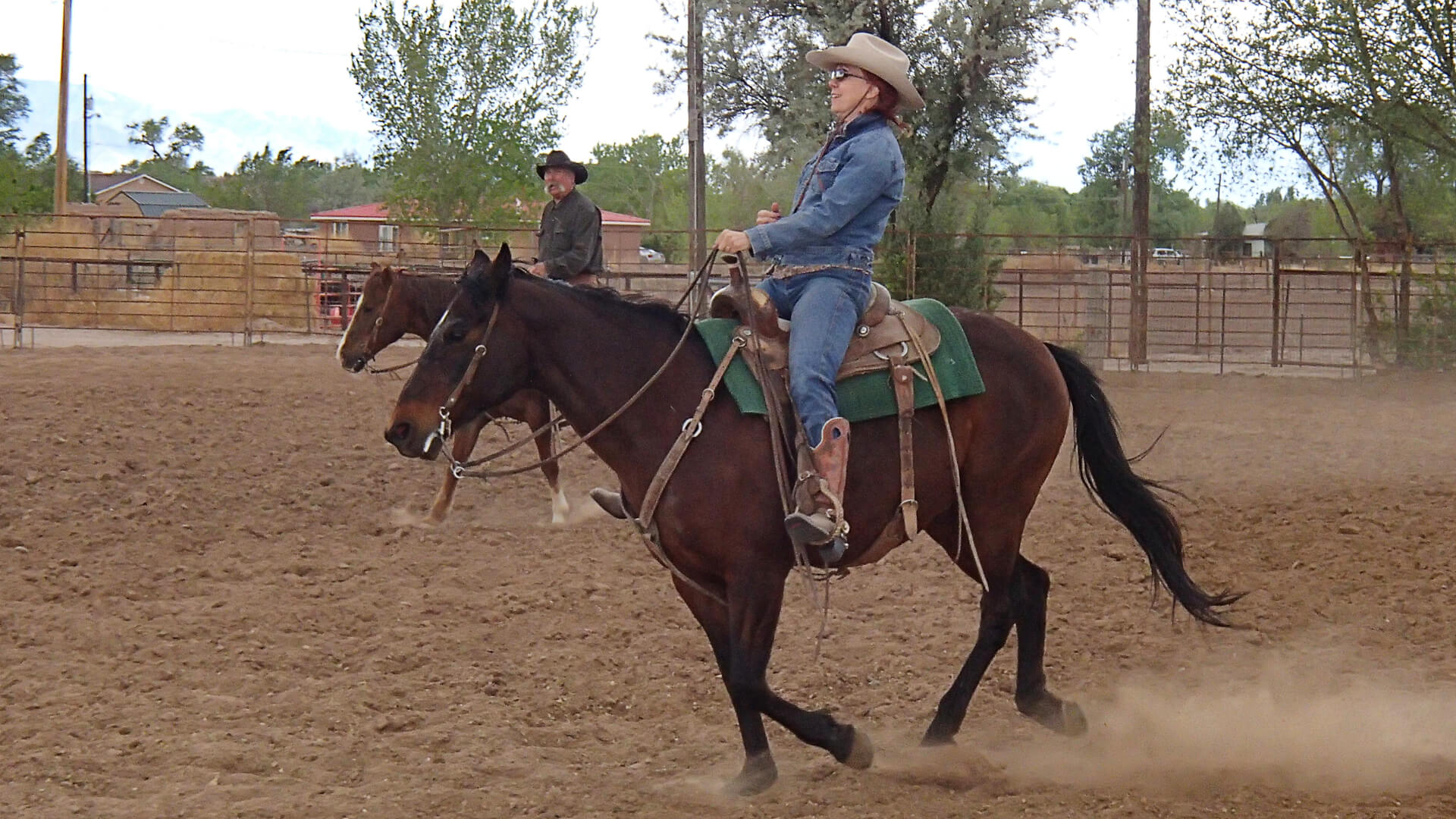
Once the fundamentals are established in the Round Pen, we move to the Arena. The environment changes, but the riding does not. What you learned in the Round Pen wasn't simply an exercise—it is how the horse has been trained to be ridden. From this point forward, consistency becomes increasingly important as the surroundings become more complex.
Consistent riding preserves the horse's training and gives the horse clear, predictable signals. It also prepares the rider to rely on those same fundamentals when the terrain, obstacles, cattle, or other situations become more demanding.
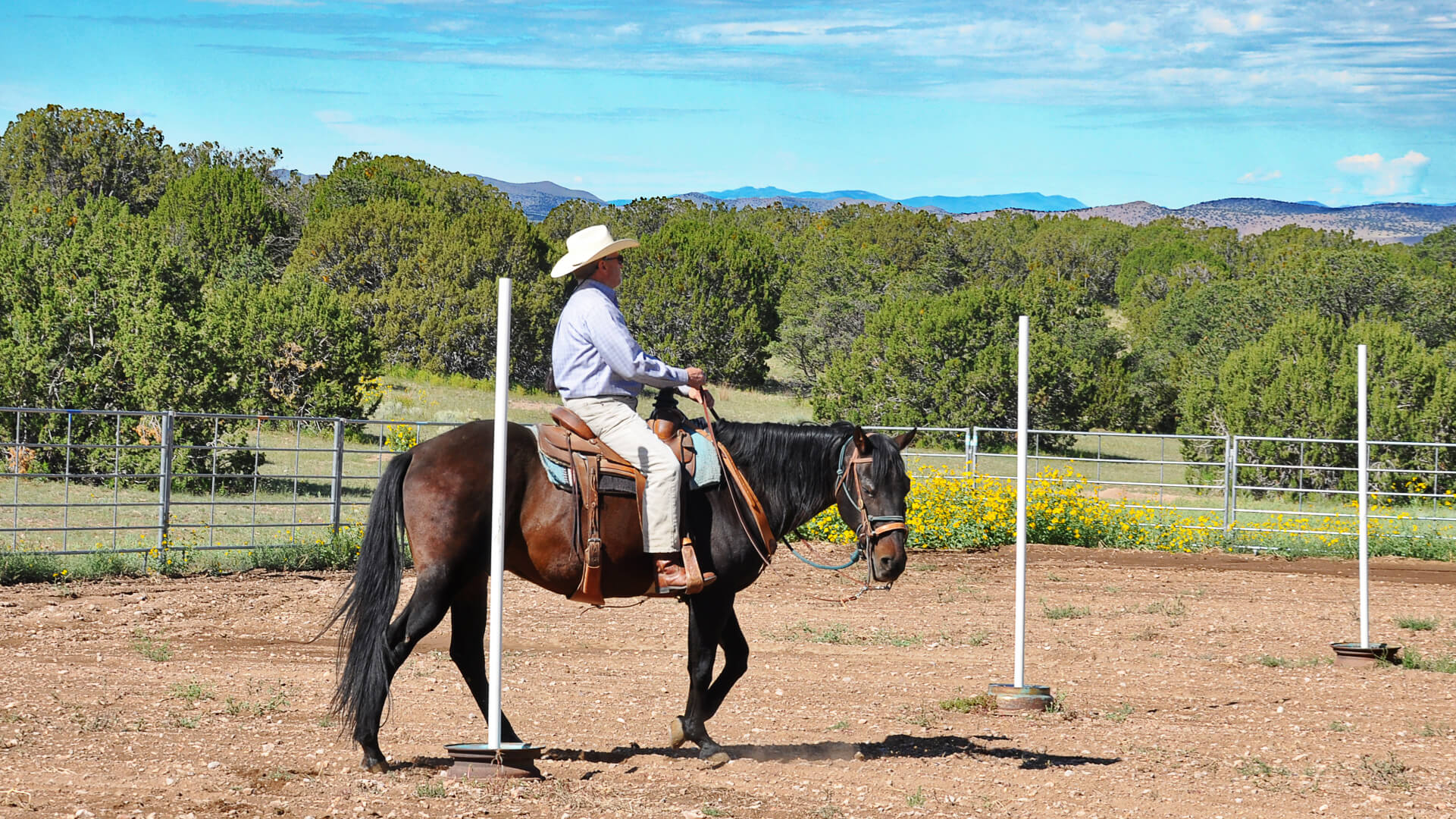
The Arena introduces challenges similar to those you will encounter on the range. With more room, the horse has more choices of its own—perhaps following another horse or returning to the gate. This is where the rider learns to take charge: to decide where the horse should go, communicate that decision clearly, and follow through consistently. Taking charge doesn't mean using unnecessary force. It means being as light as possible, but as firm as necessary. Other horses will be moving around you, so you must also begin looking ahead and deciding not only where you want the horse to go, but the best path for getting there.
Pole bending gives us a simple way to practice these decisions. Rather than seeing a pole, imagine a tree, cactus, badger hole, or other obstacle that you must safely maneuver around while continuing toward your destination.
We also introduce the trot and canter so that a change of gait doesn't become an unexpected or unsettling event on the range. Once again, the same principles of balance and control still apply.
The Arena allows you to practice these skills in increasingly complex situations while still in a controlled environment. Now it is time to put them to use on the Open Range, where the decisions become real and the rider assumes greater responsibility for choosing where and how the horse travels.

Open Range
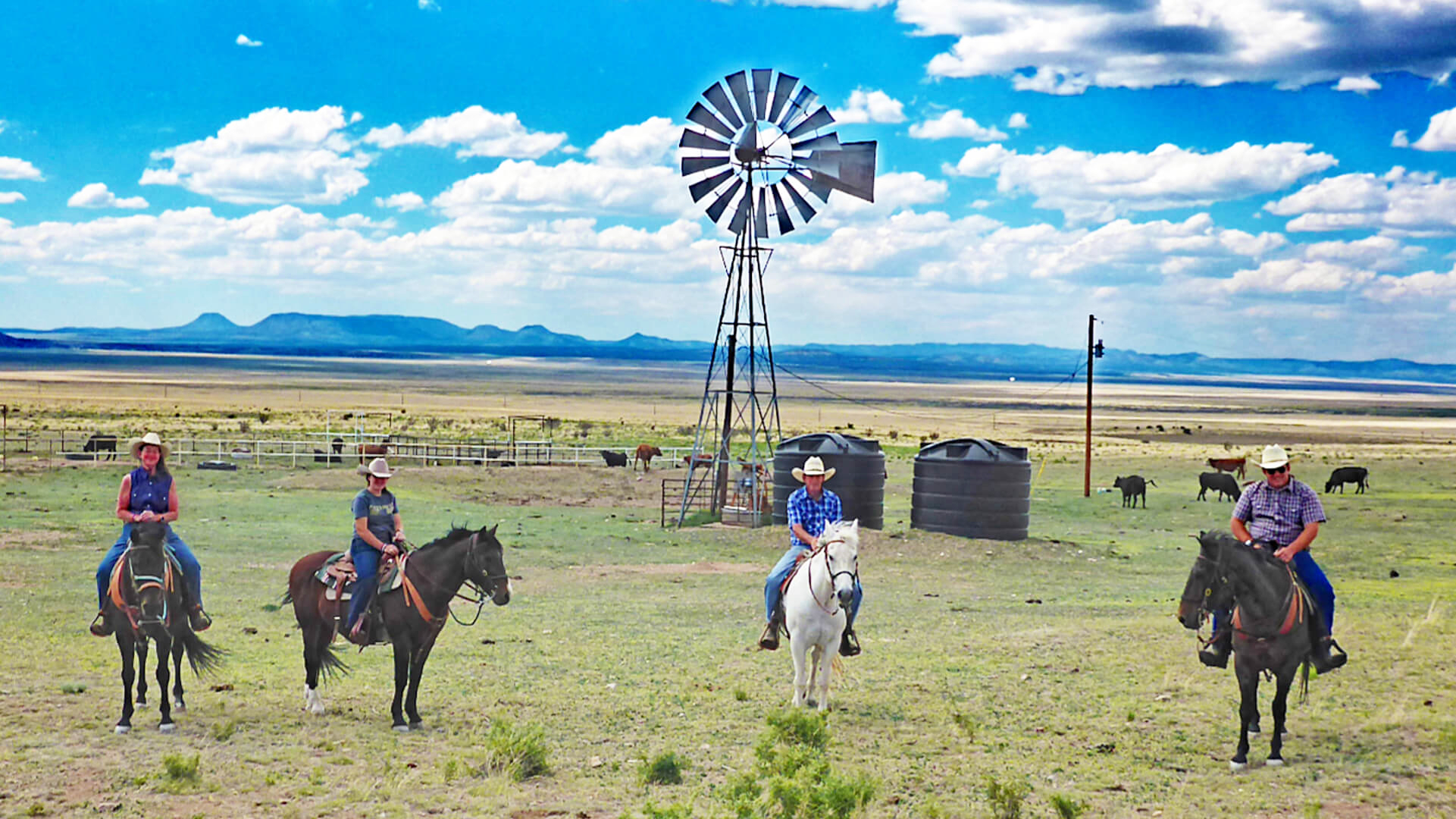
We like to think of passing through the gate onto the open range as a rite of passage. By the time our guests reach that gate, they have already accomplished a great deal, and we can't help but feel proud as we watch them ride through it.
Now it is time to ride your horse instead of going for a ride.
This is not trail riding. You begin making decisions—where to go, which path is safest, and how to maneuver around, over, or through the obstacles encountered along the way. We'll provide direction and purpose and help when necessary, but now the purpose behind the fundamentals you've practiced begins to make sense.
For many guests, this is where the previous lessons suddenly come together. The horse responds, the country opens up, and the rider realizes, "I can do this." With each successful decision, confidence grows and you begin to understand how horsemanship makes greater participation in Western living possible.
We'll also begin teaching you to read the terrain—to look ahead, recognize potential difficulties, and choose a suitable path for both horse and rider. The decisions that were simulated in the Arena now have a real purpose.
Each subsequent ride builds upon that experience. As ability and confidence grow, we can introduce more varied terrain and greater technical challenges, always matching the ride to the individual rider's abilities and interests.
Horsemanship Beyond the Arena
Horsemanship was never the goal. It is the means that allows us to participate more fully in Western living. Just as passing through the gate opens the range before you, the horse and the skills to ride it open the gate to one of the responsibilities at the heart of ranch life—stewardship.
Stewardship begins with awareness. It means learning to notice the cycles of nature and the small changes and details we might otherwise pass by. For ranchers and cowboys, stewardship means accepting responsibility for the land, cattle, horses, water, and wildlife entrusted to their care. Being a good steward begins by noticing what needs attention and understanding what, if anything, should be done about it.
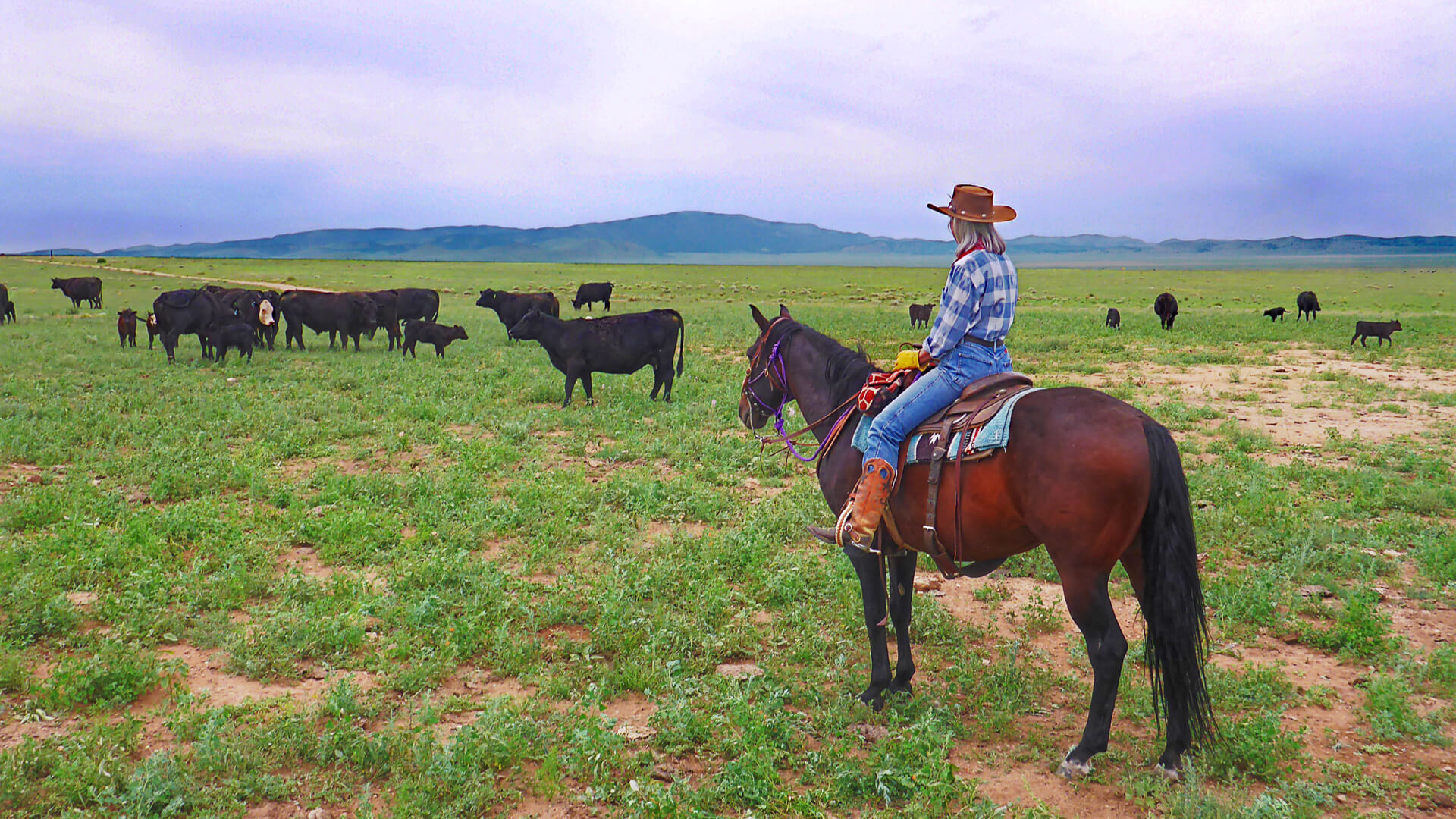
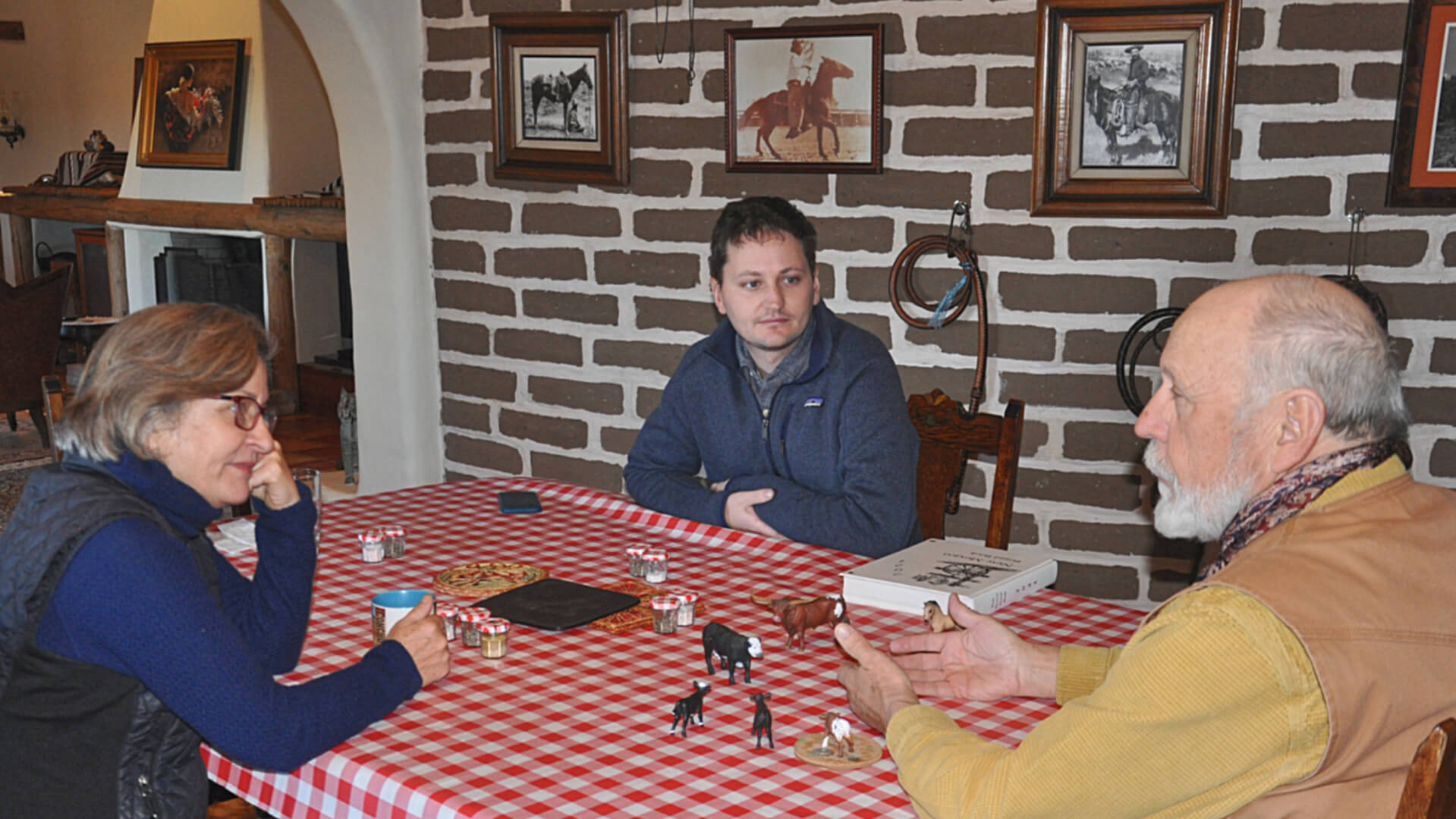
Caring for cattle requires knowing something about them. During our Cow Talk, we'll discuss why cattle are gathered at certain times of the year, what we look for when riding among them, how to recognize signs that an animal may be sick or injured, and how cattle naturally respond to horses and riders. That knowledge allows you to begin seeing cattle as a rancher does—not simply as part of the scenery, but as animals whose condition and behavior tell us something. When something needs attention, that understanding also helps you participate and lend a hand when appropriate.
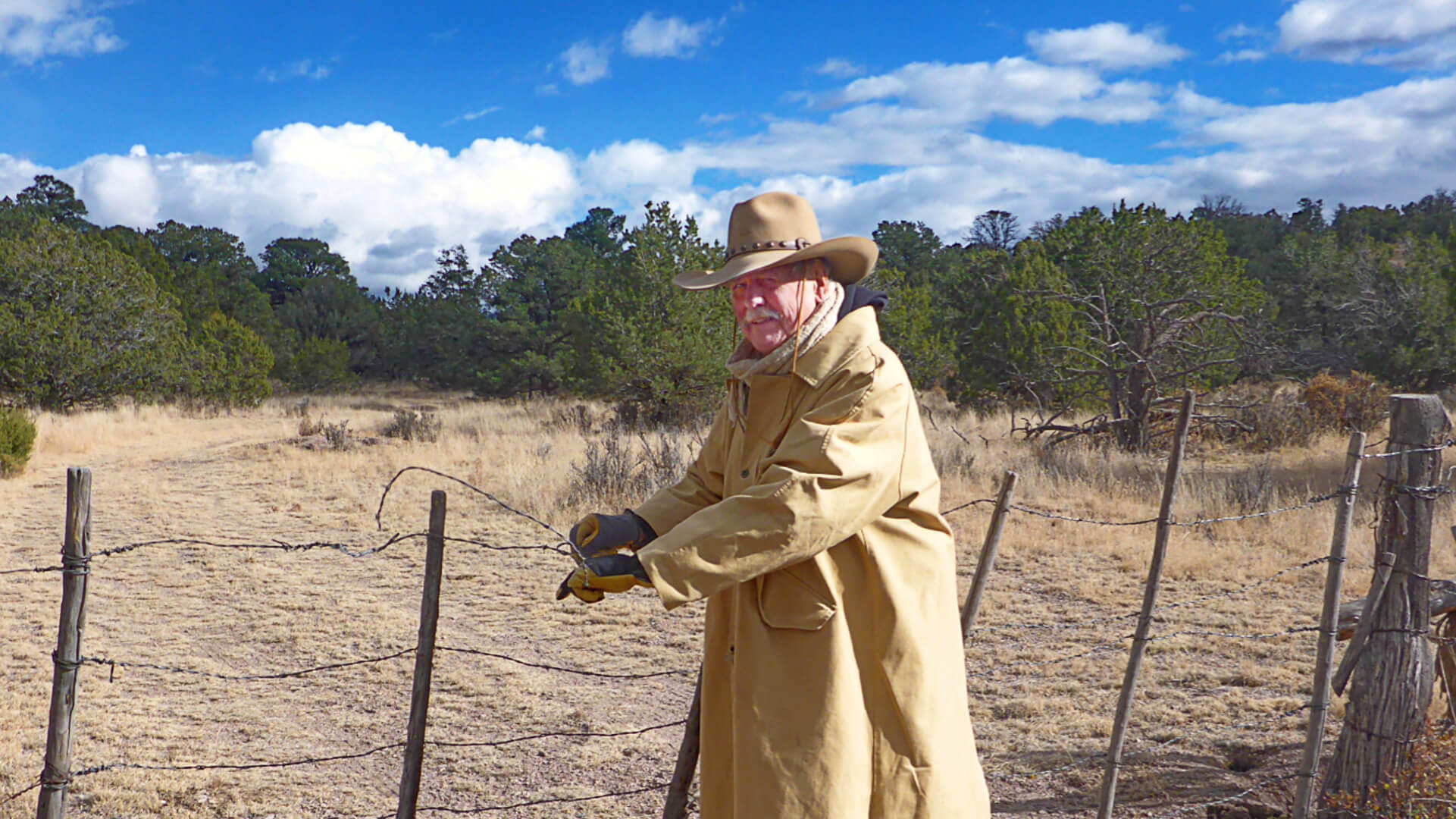
A ride may take us to check cattle, water supplies, or a stretch of fence. Sometimes we find nothing unusual; sometimes we find something that needs attention. The purpose isn't to create an activity for our guests—the purpose is to care for the ranch. When circumstances and ability allow, our guests have the opportunity to participate.
Continuing the Journey
The Introduction to New Mexico Vaquero Horsemanship Clinic is just that—an introduction. Horsemanship develops poco a poco, little by little, as understanding and ability grow through practice. The fundamentals learned during your first stay provide the foundation for everything that follows.
For guests who return, we can continue building upon that foundation with more refined control of the horse—moving the forequarters and hindquarters independently, side passing, improving transitions and collection, and applying those skills in increasingly varied terrain and ranch situations. As riding ability grows, so does the range of activities in which the rider can safely and confidently participate.
How far you choose to continue your horsemanship journey is up to you. We would be pleased to have you return to Concho Hills and continue it with us.
YouTube Channel
If you are interested, you can view our YouTube Channel here: Concho Hills Guest Ranch YouTube. We are in the process of making some videos of riding tips, our ranch, and the area.