Our Story
The Road to Concho Hills
The Discovery that Changed Our Lives
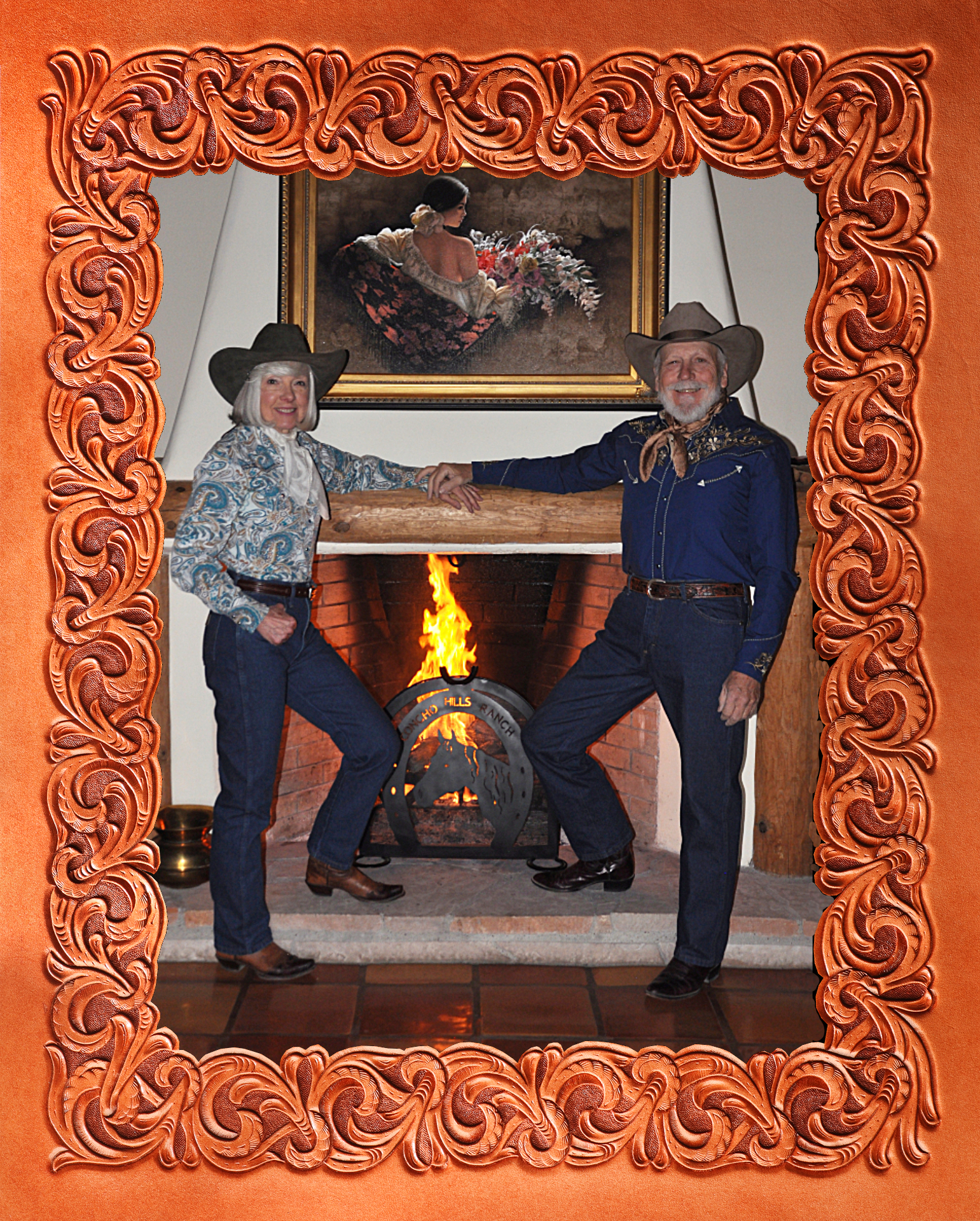
My wife Marilyn and I did not grow up planning to own a guest ranch. We spent much of our professional lives as engineers and consultants, working throughout the United States and overseas. Yet a series of unexpected discoveries—horses, horsemanship, ranching, and the people who lived that life—gradually changed our direction and ultimately led us to Concho Hills.
What began as a casual interest became a journey that reshaped our understanding of horses, the American West, and ourselves.
Southern Roots
Although our careers eventually took us around the world, both Marilyn and I spent part of our childhoods in rural communities in the South. Those experiences taught lessons about work, responsibility, self-reliance, and community that stayed with us long after we left. At the time, we gave them little thought. Only years later would we recognize how much those early experiences had shaped our values and our appreciation for a culture where those values were still being practiced.
Careers, Travel and New Horizons
Our professional careers gave us opportunities we never imagined. As engineers and consultants, we worked throughout the United States and internationally, solving technical problems and helping organizations improve their performance.
Those years taught us far more than engineering. Working with people from different countries and cultures showed us that the way people think, communicate, and solve problems is deeply influenced by the communities in which they live. Every culture has its own strengths, traditions, and ways of seeing the world.
Engineering also taught us something else that would later become invaluable in horsemanship: the importance of continual learning. Good engineering requires understanding principles rather than memorizing procedures. The best solutions come from asking why, paying attention to details, and never assuming there is nothing left to learn.
Eventually our work brought us to New Mexico—a place that would quietly begin changing the direction of our lives.
Horses Enter the Picture
Like many people, we simply wanted to learn something new.
While participating in Cowboy Action Shooting, we watched riders competing in Mounted Cowboy Action Shooting and thought, "That looks like fun. Shouldn't we learn to ride first?"
So we bought horses.
Our original goal was simply to become good enough riders to participate in mounted shooting. Instead, horses led us down a very different path.
As our interest in riding grew, we began spending more time around other horsemen and riders. One of our trail-riding friends showed a remarkable improvement in her horsemanship. Curious, complimented her riding and asked if she was doing something differently. She had started team penning and associated instruction.
That curiosity eventually led us to cattle work. For the first time, we found ourselves in situations that demanded more than simply staying in the saddle. Managing cattle required a level of horsemanship, timing, and control that we had not yet developed.
The experience was humbling. It also revealed how much we still had to learn.
Looking for answers, our friend introduced us to a person who could help us improve. That search eventually led us to horseman and rancher Ed Krauss.
Meeting Ed Krauss
When we first met Ed Krauss, we were looking for someone who could help us become better horsemen. What immediately caught our attention was not only his ability with horses, but the success of his students. Riders training under Ed were consistently winning in New Mexico's cutting horse competitions, and it was obvious that both horses and riders were performing at a high level.
As we got to know Ed, we discovered there was much more behind those results.
Ed had a humble manner, a dry sense of humor, and a quiet confidence that needed no embellishment. Nearly every lesson ended with the same simple question: "Make sense?" He wanted us to understand why we were doing something, not simply imitate it. If it didn't make sense, he explained it again.
His emphasis on fundamentals appealed to us immediately. For months he wouldn't let us ride one of his finished cutting horses. Instead, we learned on our own horses. As we developed better habits, our horses developed with us.
One lesson in particular has stayed with us. Every movement should have a purpose. If you move the reins, your horse is trying to understand what you are asking. If you don't know why you're asking, perhaps you shouldn't be asking at all.
What began as a search for better horsemanship soon became an education in something much larger.
Lessons Beyond the Saddle
Through Ed, we began to understand that horsemanship did not exist in isolation. The finest horsemen of the American West did not develop their skills simply for the sake of riding. They became horsemen because ranch work demanded it.
As our understanding grew, so did our appreciation for the culture that had produced that horsemanship. What had begun as an interest in riding gradually expanded into an interest in ranching, cattle, history, and the people who devoted their lives to those pursuits.
The horse had opened the door to something much larger.
Finding Our Community
As we spent more time with ranching families, our neighbors invited us to help with brandings and to community gatherings that had been part of ranch life for generations.
One invitation stands out above all the others.
A neighbor who lived seventeen miles down the road invited us to a traditional matanza. All of our neighbors were there, along with their families and ranch hands. We pitched in wherever we could, shared a meal, listened to stories, and experienced a community built on generosity, hard work, and friendship.
A week or so later we were invited to one of their brandings.
Somewhere during that time, Marilyn and I looked at one another and realized we had found something we hadn't expected. We had found a community whose values felt remarkably familiar. The work ethic, humility, responsibility, generosity, and willingness to help one another reminded us of the values we had learned as children.
Without ever planning it, we had found our people.
Building Concho Hills
As our appreciation for ranching and horsemanship deepened, so did our desire to create a place where others could experience it for themselves.
Concho Hills was never intended to be just a place to ride horses.
We wanted guests to understand why horsemanship matters, why neighbors still gather for brandings, why hospitality has always been an essential part of ranch life, and why the traditions of the American West continue to shape the people who live here.
Every lesson we teach, every meal we share, and every guest we welcome is influenced by the mentors, neighbors, and friends who welcomed us into this community.
We can never fully repay those gifts.
The best we can do is pass them on.
That is why Concho Hills exists.